Scale development research · Ankara Yıldırım Beyazıt University

From clay to code

We look at the history of money through records on clay tablets. Today central banks are designing a digital form of the record. CBDC-SPAR aims to develop an instrument that measures what people expect from this new money regarding surveillance, privacy, payment autonomy and legal redress .

Qualitative study ethically approved Planned period for interviews: 20 November 2026 to 28 February 2027.

Follow the story

Story

The record changes, the question remains

I · Clay

Recording and approval

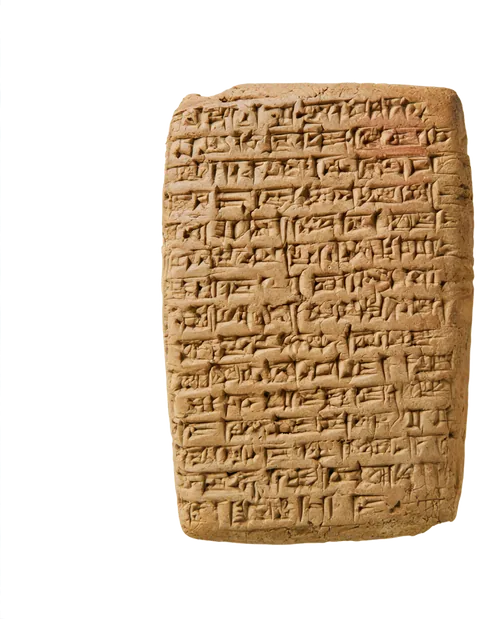
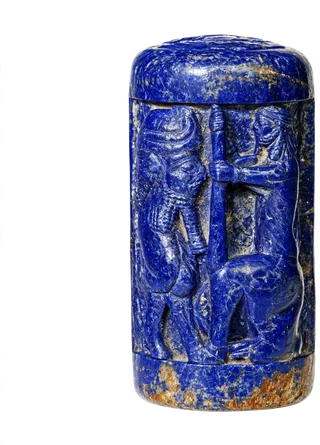
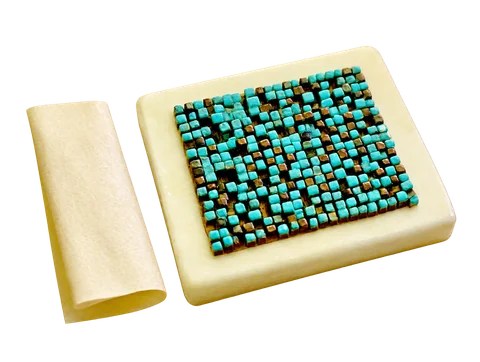
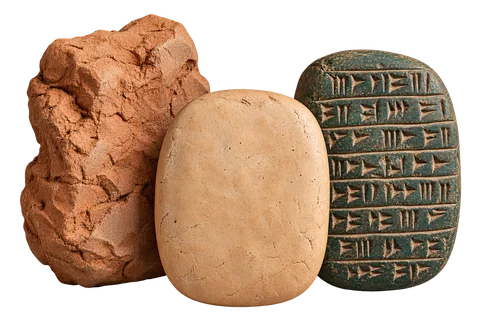
In Mesopotamia, debts, loans and delivery records were written on clay tablets. The cylinder seal was the signature showing who approved the record.

To trust a record, two things need to be known: who keeps the record and who can see it. These two questions still apply today.

II · Metal

Weight and stamp

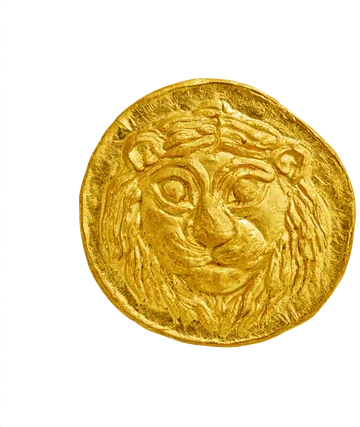
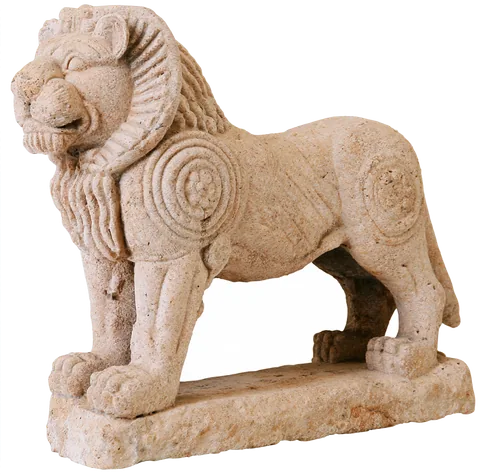
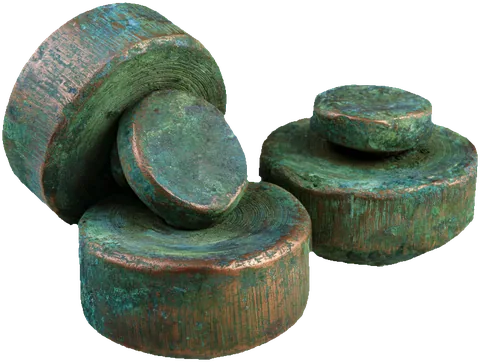
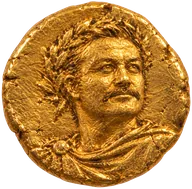
Many objects were used as means of payment, from shells weighed out to metal. In western Anatolia, Lydia minted some of the earliest known coins in the 7th century BC. The lion-head stamp showed who guaranteed the weight and value.

The record moved from the tablet to the face of the coin. Payment by coin did not require an intermediary to record the transaction. This feature of cash lies at the centre of the digital money debate.

III · Paper and accounting

From stamp to account record

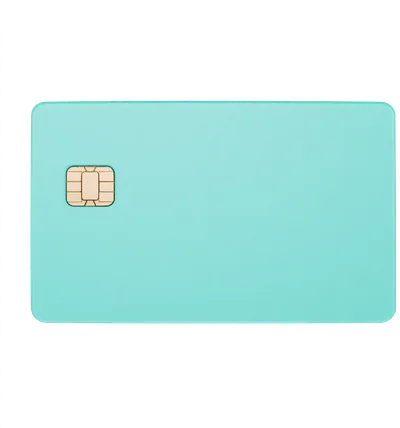
Banknotes are still in our pockets. However, a significant part of payments such as salaries, rent and bills is now made through electronic records kept by banks. Every card payment leaves a trace.

These records are today held by commercial banks and payment institutions. A central bank digital currency could add a new record keeper to this picture.

IV · Code

The record itself is being designed

Of the 93 central banks that took part in the Bank for International Settlements' 2024 survey, 85 are working on retail, wholesale, or both types of central bank digital currency.

The CBRT published the second-phase progress report of the Digital Turkish Lira Project on 24 November 2025; the report states that a decision on issuance has not yet been taken. The European Central Bank has said that if EU legislation is adopted in 2026, a digital euro could be issued in 2029.

Sources: BIS 2025, CBRT 2025, ECB

How the distributed ledger works

One record, many witnesses

In a distributed ledger, the record is kept on the nodes of a network. A blockchain arranges these records by linking each block to the hash of the previous one. Notice the difference between a proposal, an approval and a record.

ACBD
  • Node ABlock 42cb1eb16beaSame record
  • Node BBlock 42cb1eb16beaSame record
  • Node CBlock 42cb1eb16beaSame record
  • Node DBlock 42cb1eb16beaSame record

Approval 0 / 3

All four copies contain the same previous record: block 42.

Teaching example of a permissioned network · 3 approval rule · NIST: blockchain and distributed ledger technology

01 / Copies

Each node keeps its own ledger

The same history is held in four record cabinets. Keeping a ledger in several places allows records to be compared without relying on a single copy. The cabinets here represent network nodes.

02 / Proposal

The message has arrived; the transaction is not yet final

A proposal to record a transfer of 10 units from A to B is sent. A node receiving the message and accepting the record are separate events. You can try the key to see an offline node fall behind.

03 / Approval

Checking by the same rules, a shared order

Nodes validate the record against the protocol's rules. Consensus determines which valid record is added and in what order. In this teaching example we use three approvals; in real systems the threshold, roles and failure assumptions depend on the protocol.

04 / Chain

If a record changes, its trace becomes visible

Block 43 contains the hash of block 42. Change an amount in one copy: the hash recalculated with SHA-256 differs from the others. A hash makes a change visible; on its own it does not approve a transaction or hide the data.

A distributed ledger and a central bank digital currency are different concepts. The CBRT's report includes distributed ledger work; the simple approval rule here is not the protocol of the CBRT system.

How is a hash calculated? Let's try it together.

The record's trace

One letter has changed.
The trace has changed too.

A hash is a fixed-length summary calculated from data. SHA-256 produces this summary as 256 bits. Write the same text again: you get the same result. Change one character: see the difference.

Text SHA-256 hash

4100df5f0a159c67fada241fbb9e8708cf8d08e0688ab5c15cdbf73595d58687

Text SHA-256 hash

05f455d1b0402ae8eee39db8fd6cf783ddc8391de218e21c59de173d14516f6d

118 of 256 bits changed. Both outputs are 64 hexadecimal characters.

Each small square is one bit. The bronze frames in the second pattern show the bits that changed.

01 / Digest

Long text, same-sized trace

Both a single word and a long document produce a 256-bit result from SHA-256. The 64 characters on screen are the hexadecimal form of these bits. A hash is not a copy that stores the document's contents.

02 / Comparison

A hash is not a password vault

In encryption, data can be reversed using a key. A hash has no key for reversal. However, short and predictable texts can be tried and their results matched. Obtaining a hash is not the same as keeping the content secret.

03 / Chain

What is its link to the ledger?

When a block contains the hash of the previous block, the records are linked together. If the content changes, it no longer matches the old hash. Detecting a change and deciding which record is accepted are separate tasks; the second belongs to the consensus protocol.

Source: NIST hash functions · Secure Hash Standard

Citizens' questions

The discussion is technical, the questions are everyday

01 / Access02 / Choice03 / Redress
If the internet goes down, can I still pay?

That is the goal: to be able to make payments even without internet and mobile networks. The CBRT is developing offline payment as one of the core features of the second phase.

Detail
Design
The CBRT's second-phase report aims for payments without internet and mobile networks; it refers to payment information shared by smart card and QR code. The digital euro design also envisages an offline function.
In the research
We plan for offline use to be one of the features varied in the design-preference experiment.

CBRT 2025 · ECB FAQ

What will someone without a phone do?

A smart card is one alternative. The design aims to let people without a smartphone or bank account access the digital Turkish lira.

Detail
Design
The CBRT's report refers to smart cards for offline payment. The Central Bank's information page for payments states that, if issued, the digital Turkish lira could be used without requiring an age or account-holder condition. The European Central Bank states the goal of access for everyone regardless of digital or financial skills, and a free basic service for people without a bank account.
In the research
In preliminary interviews we plan to collect access concerns in participants' own words. Scale items will draw on these words too.

CBRT 2025 · Payments Centre · ECB FAQ

Who will see my payments?

According to the CBRT report, no identity information will be held in the central bank's system; your identity will be known to the bank or payment institution you choose.

Detail
Design
According to the CBRT report, the Digital Payment System does not contain individuals' identity information; identity information is held by the intermediary chosen by the user. The Payments Centre page states that privacy will be protected "to the maximum extent". The European Central Bank also states that it cannot link transactions directly to individuals and that identity checks will be carried out by payment service providers.
In the research
This is the core of the study. We plan to ask the same question about different institutions: the central bank, your own bank, public bodies and technology companies. The aim is to distinguish whether concern relates to the form of the money or to the institution keeping the record.

CBRT 2025 · Payments Centre · ECB FAQ

Will cash be abolished?

The digital Turkish lira is designed as a payment option that complements cash. Digitalisation does not mean cash is removed.

Detail
Design
The Payments Centre page describes the digital Turkish lira as an option that does not compete with existing payment methods but complements them, and states that its value is the same as banknotes. The European Central Bank states that the digital euro would complement cash, not replace it.
In the research
We plan to compare cash's untraceable character with the levels of anonymity in digital money.

Payments Centre · ECB FAQ

Is this a cryptocurrency?

No. A central bank digital currency is money issued and guaranteed by the central bank; the digital Turkish lira is designed as a form of Turkish lira.

Detail
Design
The Payments Centre page states that the value of the digital Turkish lira is the same as other forms of Turkish lira. The European Central Bank defines the digital euro as central bank money. Most crypto-assets have no issuer; some, such as stablecoins, have private issuers. None is central bank money.
In the research
In cognitive interviews we plan to test how participants understand the terms. Misunderstood phrases will be removed before they enter the scale.

Payments Centre · ECB FAQ

Will programmable money restrict my spending?

Programmable payment and a spending ban are not the same thing. The examples in the CBRT report are future-dated, periodic and conditional payments: they govern when and under what conditions a payment takes place.

Detail
Design
According to the CBRT's announcement of 3 August 2026, 17 of the 23 projects that moved to the third stage of the ecosystem call relate to programmable payments.
In the research
The payment autonomy dimension addresses this: the expectation that individuals themselves decide when, where and on what they spend their money.

CBRT 2026 · Payments Centre

What safeguards do I need if something goes wrong?

The safeguard we are looking for is being able to find an effective route of redress when a problem arises. The general framework for personal data protection is Law No. 6698; legal redress perception is one of the four dimensions of the scale.

Detail
In the research
Legal redress perception is one of the four dimensions of the scale: the belief that a person will find an effective route of complaint and redress when they encounter a problem.
Looking at one expectation from different angles

What we measure

Four expectations, one measurement instrument

SPAR, Surveillance, Privacy, Autonomy, Redress are the initial letters of the words: surveillance, privacy, payment autonomy and legal redress. General trust or intention to use does not on its own show which safeguard is expected. We aim to measure these four expectations separately.

  1. 01

    Surveillance perception

    Concern that payments may be monitored and that this information may be used beyond its purpose.

  2. 02

    Privacy expectation

    Expectations about who may see which payment information, and under what conditions.

  3. 03

    Payment autonomy

    The individual's own decision on when and on what money is spent.

  4. 04

    Legal redress

    The belief that an effective route of objection and redress exists when there is a problem.

The same wording, different record keepers

Central bank does not look at my payments unless necessary.

The rest of the sentence stays fixed; only the record keeper changes.

If the same person gives different answers to these four sentences, this is a hint that the concern may relate to who keeps the record rather than to the money itself. It is not a definitive conclusion on its own.

Method and status

What we have done, what we are planning

First people's words, then the measurement instrument, then design choices. The qualitative study has ethics approval; scale development and the preference experiment are planned studies.

A / Legal foundationsB / Testing scenariosC / Listening to participantsD / MeasurementE / Testing preferences
  1. Completed

    Stage A · Legal foundation

    The Issuance Authority and Legal Nature of the Digital Turkish Lira, is Tarık İsmet Alkan’s master’s thesis in Information and Technology Law at Ankara Social Sciences University.

    • The CBRT’s issuance authority, statutory authorisation and legal certainty
    • Legal tender status, the obligation to accept and the user’s right
    • Comparison with the European Union and Sweden; a proposed provision for Law No. 1211

    The thesis argues that the digital Turkish lira’s issuance authority and legal status should be established together through an explicit statutory provision. This academic assessment informs the project’s questions about safeguards for users.

    Read the legal framework
  2. Working model · v0.1

    Stage B · Agent-based simulation

    One crisis news item, hundreds of different decisions. How do deposits, cash and digital money move when the CBDC limit and social effect change?

    • Scenario analysis of household and bank behaviour with NetLogo
    • 150-run limit/crisis comparison, 26 extreme-value checks and a 320-run mechanism audit
    • Open model code, method and reproducible experiment outputs

    A preliminary study developing hypotheses for later field studies, working with hypothetical coefficients.

    Open the simulation
  3. Ethics approval obtainedPlanned period: 20 November 2026 to 28 February 2027

    Stage C · Qualitative study and content validation

    • Formative interviews with 12 to 16 adults
    • Expert panel of 12: content validity ratio and index (Lawshe), exploratory AHP
    • Two rounds of cognitive interviews with 10 to 12 people

    Participation is voluntary; interviews will be conducted with informed consent.

  4. Planned

    Stage D · Scale development

    • Pilot application, exploratory and confirmatory factor analysis
    • Estimation suited to ordinal data (WLSMV), reliability and validity analyses

    Separate ethics approval will be sought before data collection.

  5. Planned

    Stage E · Design-preference experiment

    • Pre-registered choice-based conjoint experiment
    • Varied attributes: level of anonymity, offline use, holding limit, where data is stored, access control
    • Embedded 2×2 experiment: the effect of legal safeguard information
  6. Application draft

    Extended scope · TÜBİTAK 3005-B

    • Support for item evaluation with locally run language models
    • Open measurement instrument, policy brief, open code and data

Guide

For non-specialists

Money agenda · October 2026

What will change in our pockets?

Payment when the phone is off, the future of money in the bank and the limits of a digital wallet. We look at major money debates from everyday life.

6 October 2026 · European Central Bank

The internet is down. How will we pay at the till?

This is the most concrete question in the digital money debate: will shopping continue even without a connection?

The ECB's recent speech treats the digital euro as a public payment instrument that complements cash. Offline use, payment resilience and the protection of personal data are on the design agenda.

For citizens, the issue is not the name of a technology: it is having an alternative when the phone, card or wallet fails. Offline payment studies in Türkiye should also be read through this same question.

Read the ECB speech ↗

3 August 2026 · CBRT

What tasks is the digital Turkish lira now being tested for?

23 projects from 12 banks and 6 payment/electronic money institutions have moved to the third stage, where tests will be carried out. Programmable payments, tokenisation and interoperability with existing systems stand out.

Tokenisation is the representation of an asset or right in a digital record. The CBRT uses the term jetonlaştırma for this. Digital representation and the legal nature of that asset are not the same question.

See the CBRT's project distribution →

2026 · Bank for International Settlements

When money is digitalised, who will safeguard trust?

The BIS 2026 report discusses stablecoins, tokenisation and new payment arrangements in terms of trust in the monetary system. A quick application alone does not create a reliable monetary order.

Our question is more personal: who keeps the record, who can see my spending, and to whom do I turn if there is an error? Design choices, as well as people's expectations, will shape this future.

Go to the BIS report →

Lab · CBDC-SPAR

How quickly does a rumour move money in the bank?

If seeing a neighbour's decision changes your own, individual choices can become a shared wave. Our NetLogo model examines this spread and the role of the CBDC limit through adjustable scenarios.

Under the same starting conditions, change the limit, crisis intensity or social effect. Compare the results, then see which assumption makes the difference.

Run your own scenario →

Team

Researchers

Let's talk about academic collaboration →

Sources

Sources for the information on this page

  1. Central Bank of the Republic of Türkiye. Digital Turkish Lira Second Phase Progress Report. 24 November 2025. tcmb.gov.tr
  2. Central Bank of the Republic of Türkiye. Press Release on the Results of Applications to the Call to Join the Digital Turkish Lira Project Ecosystem (2026-33). 3 August 2026. tcmb.gov.tr
  3. Ödemelerin Merkezi. Digital Turkish Lira information page. odemelerinmerkezi.org
  4. Illes, A., Kosse, A. and Wierts, P. Advancing in tandem: results of the 2024 BIS survey on central bank digital currencies and crypto. BIS Papers No 159, 22 August 2025. bis.org
  5. European Central Bank. Digital euro: timeline and progress. ecb.europa.eu
  6. European Central Bank. Frequently asked questions on a digital euro. ecb.europa.eu
  7. Bank for International Settlements. Anchoring trust in money: innovation beyond stablecoins. Annual Economic Report 2026, Chapter III. bis.org
  8. European Central Bank. Money in the digital age: digital euro, tokenisation and the role of central banks. 6 October 2026. ecb.europa.eu
  9. European Central Bank. Money in transition: digitalisation and innovation in payments. Conference, 15 June 2026. Programme and speeches
  10. Canaltay, C. Digital Turkish Lira Studies in Türkiye. Eurasia Research Institute, 21 May 2024. Historical reading
  11. NIST. Blockchain Technology Overview, NISTIR 8202, 2018. Technical report.